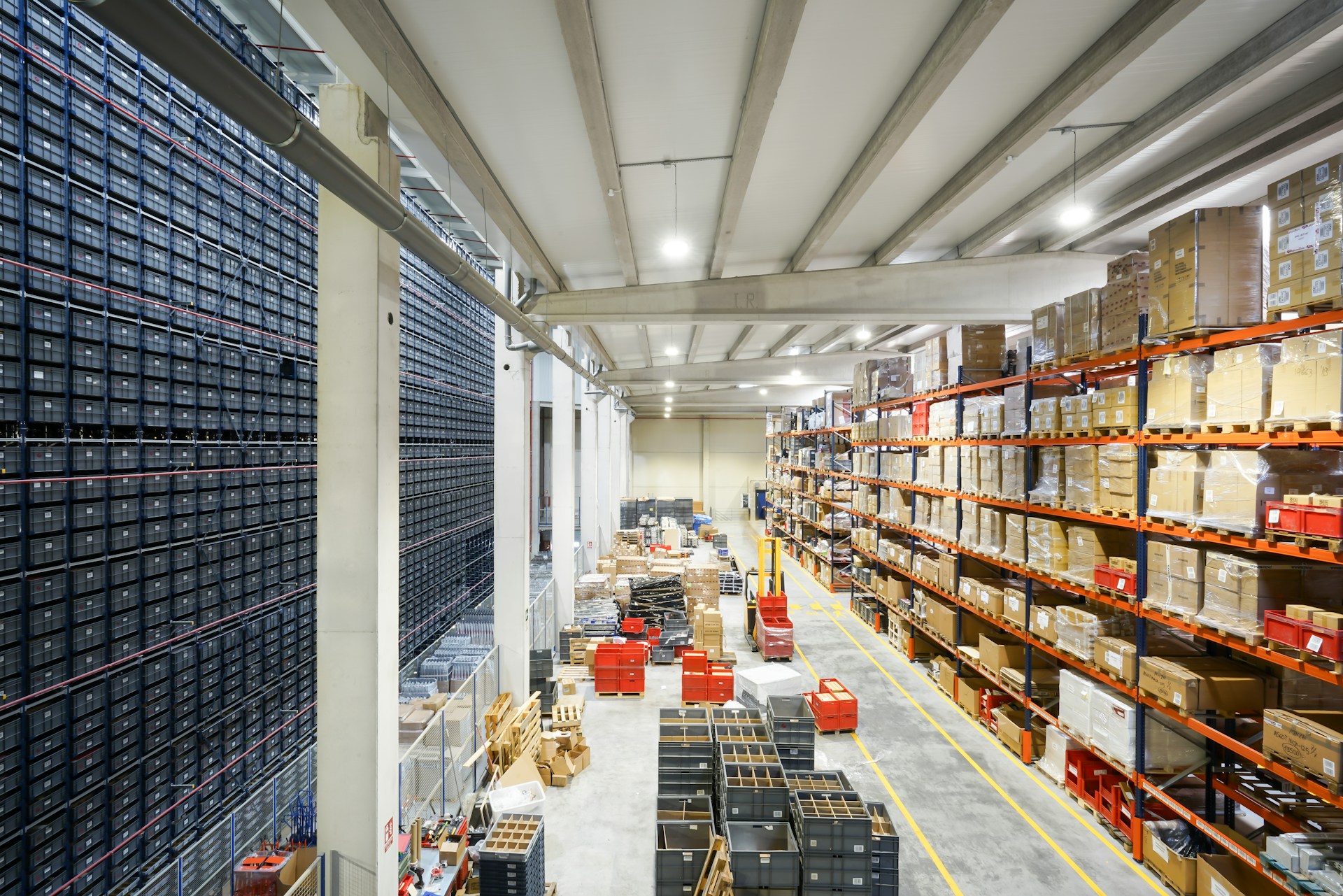
2021 to 2026 has been a wild ride with MyFBAPrep, and now that I’m signing off, I’m doing what I wish I did with all of my favorite clients — a post-mortem!
Thank you, MyFBAPrep: Five years of building a B2B marketing function from zero
A bookmark of the work — and a thank-you to a rare client.
The short version
In April 2021, Tom Wicky hired me as MyFBAPrep’s first non-agency marketer. There was a WordPress site, a MailChimp list, a founding team with a strong thesis, and no marketing function. Five years later, MyFBAPrep is a 100+ warehouse, $1B+ GMV, Amazon-recommended 4PL with multi-year placements on the Inc. 5000, the Financial Times Americas’ Fastest Growing Companies list, and the Deloitte Technology Fast 500.
I’m moving on in June 2026. MyFBAPrep has graduated from “build and grow” into “maintain” — and my work shines brightest in the former. This post is part recap, part thank-you, part bookmark of what we shipped together. If you’re a founder looking for what one marketer can actually own from Day 1, this is the honest version.
What I walked into in April 2021
The brief from Tom: build a marketing function. Not “run the team” — there was no team. The early weeks were discovery calls with Tom, Bart, Taylor pinning down the ICP, pricing, qualifying questions, and a north-star of $2M MRR.
From there, I owned:
- Brand, voice, and positioning
- Content strategy and editorial calendar
- Website rebuild and ongoing site management
- Paid digital testing across Google, LinkedIn, Meta, Bing, and Reddit
- Partner marketing program, including hiring and training the first Partner Marketing Manager
- Sales enablement — decks, case studies, ICP personas, event playbooks
- Budget, vendors, agencies, contractors, and hiring
None of those line items is unusual for a head of marketing. Owning all of them from scratch, on a lean budget, for a category many B2B marketers have never heard of — that’s the part I’ll miss.
Year 1: The website redesign that changed our growth curve
The first big swing was a full website rebuild, launched in August 2021. I wrote up the playbook in detail here: MyFBAPrep Website Redesign. The short version of the results:
- +255% inbound leads per day vs. the previous month
- +125% contact-form submissions vs. the two weeks prior
- +53% conversion rate for visitors reaching the contact page
- +22% funnel conversion from homepage to pricing
We didn’t redesign for its own sake. We repositioned away from “FBA prep service” and toward the enterprise 4PL MyFBAPrep was becoming. New service pages. Enterprise-oriented CTAs (Book a Demo, Contact Us) replaced self-serve signups. Sticky pricing-page CTAs with social proof. Session analysis via FullStory and Heap. A/B tests through Google Optimize.
By March 2022, monthly pageviews had grown from 6,206 to 11,120. The newsletter was hitting a 45.39% open rate against a 15.68% industry average. We had shipped brand guidelines, a voice/tone guide, writer guidelines, four case studies, and a Notion asset library we’d keep using for the next four years.
Years 2–3: Earning the category-authority position
Once the foundation was in place, the compounding channels took over. We published 2–3 blogs a week, ran the newsletter twice a month, and added nine service pages (that number has grown since), industry pages, a partners page, warehouse locations, careers, and a warehouse-application flow.
An SEO consultant came on in mid-2024. A custom machinery landing page held steady direct, referral, and organic traffic. Location pages launched in early December 2024 ranked within two weeks (one became a top-3 growing page in Google Search Console).
Domain Rating climbed from 10 (March 2021) to 24 (mid-2022). Referring domains went from 119 to 269 — a 2.3x lift in 15 months. Monthly contact-form submissions went from 36 to 354 in six months, then steadied in the 280–350 range.
The best content bet of 2024 was the interview series. In the first month after launch, compared to the month prior:
- Contact-form submissions: +39.7%
- Total pageviews: +40.3%
- Blog pageviews: +30.4%
- Unique visitors: +27.2%
- Direct traffic: +152%
- Organic social traffic: +223%
Outreach hit rate was the quiet win — 15 of the first 20 targets responded positively, and 11 interviews were booked in two email exchanges. As much as I’d like to say I’m a brilliant cold-emailer, that’s a testament to MyFBAPrep’s brand. It’s my hope that the series relaunches later in 2026.
Year 4: Paid media as a discipline
2024–2025 was the year we ran paid digital the way I’d always wanted to — as a learning system, not a “throw money at ads” reflex. Each test got a hypothesis, a budget, audience logic, a creative set, a decision rule, and a public writeup.
- Google Search Ads for B2B audience discovery and brand defense: 10 leads at $38.11/lead during our first structured test.
- LinkedIn Ads and audiences for a B2B ecommerce logistics company: a broad 800K–900K audience produced ~$450 in spend for 1 click. After switching to a custom-uploaded ICP list, the same creative drove a contact-form lift in a historically slow December. Overall: 147 clicks at $16.78 CPC. The biggest differentiator wasn’t creative but a list we built by hand.
- Meta Ads setup best practices: a full B2B Meta build launched January 2, 2025 using TOFU/BOFU structure, a 6,000-name ICP lookalike at 1% match, 180-day retargeting, five creatives, and four headline variants. Result: 19 leads at $24.44/lead (BOFU) and $50.85/lead (TOFU).
- Reddit Ads for a B2B ecommerce logistics company: $2,913 across Amazon-adjacent subreddits. The duck-meme creative hit 0.827% CTR at $0.71 CPC and delivered 1,552 clicks, but only 1 verified contact-form submission tied back through retargeting. Reddit didn’t clear the bar against Google and Meta, and we killed the channel. Killing channels is a form of progress.
The full framework, which experiments made the cut, which were deprioritized, and why, is laid out in Running growth experiments at MyFBAPrep.
The quieter wins: partner program, sales enablement, and the team I handed off to
The part of this engagement I’m proudest of isn’t in any individual case study. It’s the partner marketing program.
By 2025 we had a two-track program: lead exchanges and paid referrals on one side, co-marketing on the other; guest posts, newsletter swaps, joint interviews, partner-page inclusion, webinars. A documented handover flow. UTM-based reporting back to partners. A 2025 partnership pitch deck I still use as a reference template. The partner list ran past 40 active relationships and ended with too many to count, so I created a tracking system.
I hired and trained the first Partner Marketing Manager, the first Distribution Marketing Manager, and the first Social Media Manager so the program would run without me. By 2025, it did. That’s the signal; when the engine runs without the person who built it, the function has actually been built.
On sales enablement: we built a 24-slide overview and value-prop deck, the partnership pitch deck, seven+ case studies, an ICP deck with three personas built from real customer interviews, a strategic-partnership pitch deck for a prospective deal, an in-person event playbook for floor walkers, MailChimp audience builds, and an editorial calendar tight enough that a new writer could ship a post in week one.
AI visibility during an industry pipeline downturn
One of the 2025 bets I’m most proud of is less visible in the numbers and more visible in where the leads came from.
We ran AI grader audits on Gemini, OpenAI, and Perplexity. We tracked ChatGPT, Claude, and Perplexity referral traffic. We added FAQs, new service pages, and ensured our website was fast and usable for humans and crawlers. By peak, 17% of inbound leads self-declared as AI-sourced. Against the state of B2B logistics pipelines in 2025 (most of the industry was in a visible pipeline slump) that number says something specific: AI search is a real acquisition channel for companies that started working it before it was obvious.
Even now when I run comparison audits for unrelated tasks and clients, I always see MyFBAPrep popping up as Claude thinks.
The PR proof: Awards MyFBAPrep earned during my tenure
Accolades are lagging indicators. These are the ones MyFBAPrep earned while we were running this playbook:
- Financial Times Americas’ Fastest Growing Companies: #4 (2024), #94 (2025), #182 (2026)
- Inc. 5000: #44 (2023, #1 in logistics/transportation, 8,773% three-year growth), #1,167 (2024), #3,765 (2025)
- Inc. 5000 Regionals (Southeast): #9 (2023, 2,886% two-year revenue growth from 2019 to 2021), #24 (2024, 711% two-year growth), #123 (2025)
- Deloitte Technology Fast 500: #20 (2023), #264 (2024)
- Amazon Recommended FBA Prep Service Provider (July 2025): One of a very small number of providers selected after a forensic evaluation across seven prep services, national coverage, capacity for 1B+ units/year, SLAs, security, and centralized customer operations
I didn’t close any of those evaluations. But I ran the marketing function that shaped the public narrative around the company as they happened.
2025, honestly
2025 was the first year the plan had to shrink. Budget contracted, and blog cadence dropped from 2–3/week to 1 before restoring to 2 by November. Even with the contraction:
- Monthly contact-form submissions averaged ~160/month
- The newsletter held at 4,845 subscribers at a 30%+ open rate
- LinkedIn followers hit 2,850, the #1 channel priority since 2023
- AI-sourced leads peaked at 17% of inbound
That’s a good place for a company to be. It’s also a signal that the work I do best–building and scaling from zero–isn’t the work MyFBAPrep needs next.
Why I’m moving on
MyFBAPrep has become what we set out to build. The brand is strong. The pipeline is resilient even as the industry softens. The marketing engine runs on defined playbooks. Someone will take this operation and optimize it into a well-run maintenance function, and they’ll do an excellent job.
But it won’t be me. I’m at my best when the category is unclear, the team is a blank slate, and the next 90 days will set the curve for the next three years. I’ve been in that mode at MyFBAPrep for almost five years. I’m ready to be in it again somewhere else.
A thank-you
To Tom Wicky for trusting a solo marketer to build the whole function, for backing the experiments even when the attribution was messy, and for being the kind of founder who actually reads the monthly report.
To Bart, Taylor, and the rest of the early team for treating marketing as an engineering problem, not a cost center.
To the writers, designers, developers, agencies, partner marketers, and SEO consultants who shipped the work, and every interview guest who said yes–thank you.
And to MyFBAPrep, congratulations on the recognition, and on the next chapter. It’s been a privilege.
What’s next
If you’re a founder or COO at a build-phase B2B eCommerce ops company and you’re looking for the person who’ll own your marketing function end-to-end — brand, content, paid, partner, SEO, AI visibility, the team — I’d love to talk. More case studies and experiments at rachelandreago.com/portfolio. The next playbook instance is waiting for the right company.
Rachel Andrea Go is a fractional CMO for build-phase B2B eCommerce ops companies. She ran marketing at MyFBAPrep from April 2021 through May 2026. Previous builds include Deliverr (acquired by Shopify) and Skubana (now Extensiv).